Buy suedniedersachsen.eu ?
We are moving the project
suedniedersachsen.eu .
Are you interested in purchasing the domain
suedniedersachsen.eu ?
domain@kv-gmbh.de · 0541-91531010
Buy suedniedersachsen.eu ?
Why is nature important for children?
Nature is important for children because it provides them with opportunities for exploration, creativity, and physical activity. Being in nature can help children develop a sense of wonder and curiosity about the world around them, as well as foster a deeper connection to the environment. Additionally, spending time in nature has been shown to have numerous physical and mental health benefits for children, including reducing stress, improving concentration, and promoting overall well-being. **
What are activities with children in nature?
Activities with children in nature can include hiking, exploring local parks, going on nature scavenger hunts, bird watching, camping, and gardening. These activities provide children with opportunities to connect with the natural world, learn about different plants and animals, and develop a sense of wonder and appreciation for the environment. Engaging in outdoor activities also promotes physical activity, creativity, and overall well-being for children. **

Similar search terms for Children
Top-Angebote
Products related to Children:
-
Pan Macmillan Children of Time Series 3 Books Collection Set (Children of Time, Children of Ruin & Children of Memory)Children of TimeChildren of Time, is the epic story of humanity's battle for survival on a terraformed planet.Who will inherit this new Earth? The last remnants of the human race left a dying Earth, desperate to find a new home among the stars. Following in the footsteps of their ancestors, they discover the greatest treasure of the past age – a world terraformed and prepared for human life.Children of RuinIt has been waiting through the ages. Now it's time . . .Thousands of years ago, Earth’s terraforming program took to the stars. On the world they called Nod, scientists discovered alien life – but it was their mission to overwrite it with the memory of Earth. Then humanity’s great empire fell, and the program’s decisions were lost to time.Aeons later, humanity and its new spider allies detected fragmentary radio signals between the stars. They dispatched an exploration vessel, hoping to find cousins from old Earth.But those ancient terraformers woke something on Nod better left undisturbed.And it’s been waiting for them.Children of MemoryThey dreamed of a new homeThey woke to a nightmareOn Imir, Captain Holt founded a new colony on an empty world. In the process, he created hope and a new future for humanity. But generations later, his descendants are struggling to survive. As harvests worsen and equipment fails, strangers appear in a town where everyone knows their neighbour. Now the inexplicable lurks in the woods and the community fears it’s being observed – that they’re not alone.They’d be right, as explorers from the stars have arrived in secret to help this lost outpost. Confident of their superior technology, and overseen by the all-knowing construct of Doctor Avrana Kern, they begin to study their long-lost cousins from Earth.16,49 £*Shipping: 2,99 £Secure redirect to the provider
-
Tudor Children by Nicholas Orme - Hardback Tudor Social History Book, Yale University Press, New, 256 PagesTudor Children is a richly illustrated and vividly told history of childhood in Tudor England, written by leading historian Nicholas Orme. Drawing on years of original research, Orme reconstructs how children were born, raised, educated, and entertained between the fifteenth and seventeenth centuries. From royal nurseries to humble cottages, the book reveals the realities, dangers, and delights of growing up under the Tudors, offering fresh insight into a previously overlooked corner of English social history. What was it really like to be young in Tudor England? In this beautifully illustrated and characteristically lively account, Nicholas Orme answers that question by piecing together evidence from wills, portraits, court records, schoolbooks, and household accounts. He explores pregnancy and birth, naming customs, and breastfeeding.15,99 £*Shipping: 2,99 £Secure redirect to the provider
-
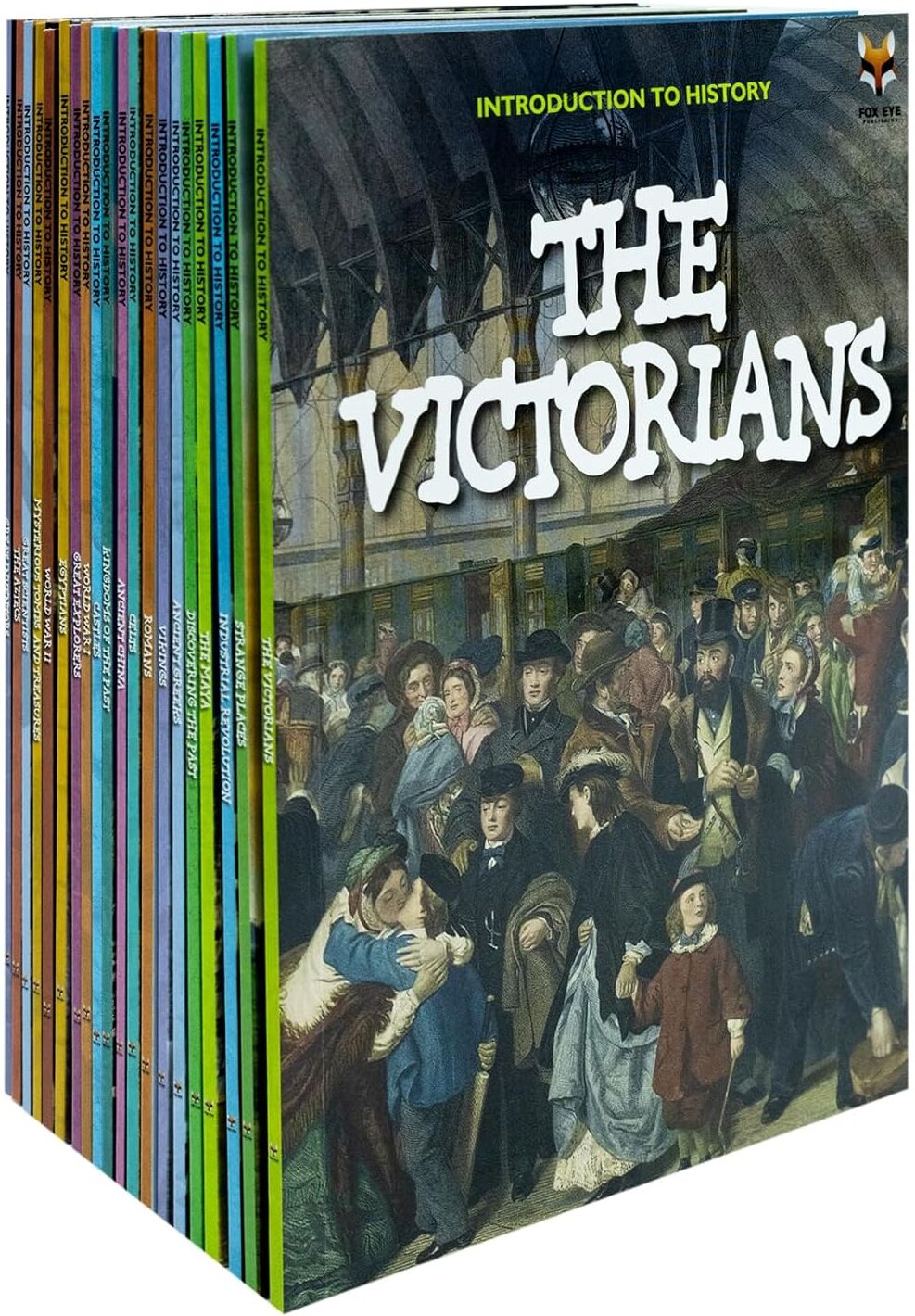
Fox Eye Publishing Children Introduction to History for Beginners (Series 1 & 2) 20 Books Collection Set - Illustrated Learning Book of World History for Kids"Introduction to History Series 1" comprises a captivating 10-book set delving into pivotal periods, figures, and events that shaped our world. Each book is a gateway to a distinct facet of history, inviting readers to embark on an enriching journey through time. Introduction to Ancient China: The ancient Chinese were clever inventors and fearsome fighters. Find out more about them and their amazing way of life inside. Introduction to Industrial Revolution: What was the Industrial Revolution and why did it happen? Find out inside. Introduction to Strange Places: What are strange places and what have we learnt about them? Find out inside. Introduction to Celts: The Celts were fearsome warriors and clever craftspeople. Find out more about them and their amazing way of life inside. Introduction to Discovering the Past: The past is full of wonder, and we can discover it by digging it up! Find out all about past people and how we learn about them inside. Introduction to Ancient Greeks: The ancient Greeks were clever thinkers and master builders. Find out more about them and their amazing way of life inside. Introduction to The Maya: The Maya were fierce fighters and master mathematicians. Find out more about them and their amazing way of life inside. Introduction to Romans: The Romans built an incredible empire that conquered much of the world. Find out more about them and their amazing way of life inside. Introduction to Vikings: The Vikings were fierce fighters and great explorers. Find out more about them and their amazing way of life inside. Introduction to The Victorians: Who were the Victorians and how did they change history? Find out inside. Each book in this set offers a captivating glimpse into a different facet of history, providing a comprehensive introduction to these diverse and intriguing civilizations and eras. "Introduction to History Series 2" comprises a captivating 10-book set delving into pivotal periods, figures, and events that shaped our world. Each book is a gateway to a distinct facet of history, inviting readers to embark on an enriching journey through time. Introduction to Great Explorers: Who were history’s great explorers and where did they travel? Find out inside. Introduction to Great Inventors: Who were history’s great inventors and what did they invent? Find out inside. Introduction to Great Scientists: Who were history’s great scientists and what did they discover? Find out inside. Introduction to Castles: Castles were amazing buildings that were home to many people. Find out all about castles and what life was like inside them. Introduction to Kingdoms of the Past: What were the great kingdoms of the past and who ruled them? Find out inside. Introduction to Mysterious Tombs and Treasures: What are mysterious tombs and treasures and where can they be found? Find out inside. Egyptians: The ancient Egyptians were clever farmers and brilliant builders. Find out more about them and their amazing way of life inside. The...14,99 £*Shipping: 2,99 £Secure redirect to the provider
-
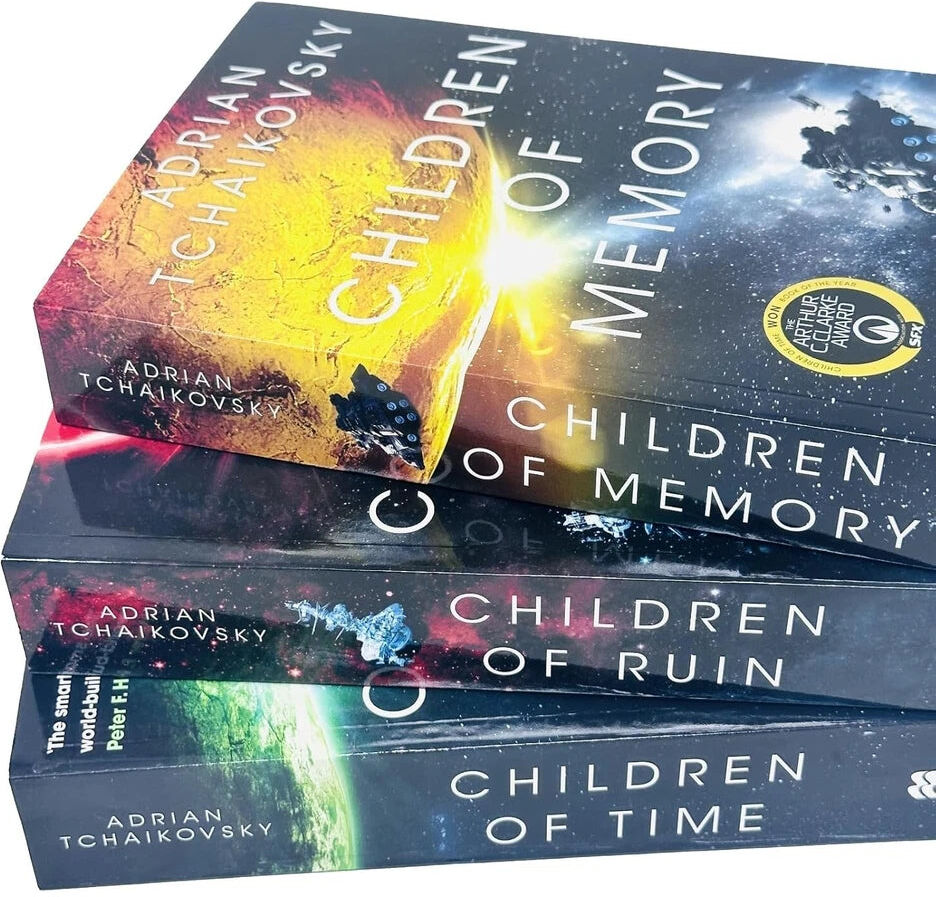
Pan Macmillan Children of Time Series 3-Book Collection Set by Adrian Tchaikovsky - Children of Time, Children of Ruin, Children of Memory - Paperback Sci-FiThis Children of Time Series 3 Book Collection Set brings together Adrian Tchaikovsky's Arthur C. Clarke Award-winning space opera trilogy in one brand-new paperback bundle. The set traces evolution, memory, and survival across three interlinked novels, making it a great pick for science fiction readers and book clubs. The series includes Children of Time, Children of Ruin, and Children of Memory. Published by Pan Macmillan, this collection is a must-have for fans of the series and the author.12,99 £*Shipping: 2,99 £Secure redirect to the provider


-
How can one bring children closer to nature?
One can bring children closer to nature by incorporating outdoor activities into their daily routine, such as going for nature walks, picnics, or camping trips. Providing opportunities for children to explore and play in natural environments, such as parks, forests, or beaches, can help foster a connection to the natural world. Additionally, involving children in gardening, birdwatching, or other nature-related hobbies can help them develop an appreciation for the beauty and importance of nature. Finally, teaching children about the environment, wildlife, and conservation can help them understand the interconnectedness of all living things and inspire them to protect and preserve the natural world. **
-
What is the history of the children?
The history of children is a complex and multifaceted one, shaped by cultural, social, and economic factors throughout time. In ancient societies, children were often viewed as property of their parents and had limited rights. During the Middle Ages, children were often put to work at a young age and had few opportunities for education. The concept of childhood as a distinct and important stage of life began to emerge during the Renaissance, and the 19th and 20th centuries saw significant advancements in child labor laws, education, and child welfare. Today, children's rights are recognized and protected by international conventions and laws, although challenges such as child labor, poverty, and access to education still persist in many parts of the world. **
-
Is man a creature of nature or culture, or is culture the nature of man?
Man is a complex being influenced by both nature and culture. While humans are inherently part of the natural world, our behaviors, beliefs, and practices are largely shaped by the societies we live in. Culture can be seen as the nature of man in the sense that it is a fundamental aspect of human existence, shaping our identities and interactions with the world. Ultimately, the relationship between nature and culture is intertwined in shaping the essence of humanity. **
-
Is man a being of nature or culture, or is culture the nature of man?
Man is a being of both nature and culture. While humans are inherently a part of the natural world, our ability to create and participate in culture sets us apart from other species. Culture shapes our beliefs, behaviors, and interactions with the world, becoming an essential part of our identity. Therefore, culture can be seen as the nature of man, as it influences and defines our existence in profound ways. **


Is culture a form of nature?
Culture is not a form of nature, but rather a product of human society. While culture can be influenced by nature and the environment, it is distinct in that it is created, shared, and passed down through generations by humans. Nature refers to the physical world and natural phenomena, while culture encompasses the beliefs, customs, arts, and social behaviors of a particular group of people. **
Can children carry children?
No, children cannot carry children. Physically, children's bodies are not developed enough to support a pregnancy and give birth. Additionally, children lack the emotional and mental maturity needed to handle the responsibilities of pregnancy and parenthood. It is important for individuals to reach a certain level of physical, emotional, and mental maturity before considering starting a family. **
Top-Angebote
Products related to Children:
-
Usborne Beginners History 10 Books Collection Box Set Educational History Books for Children - Stone Age Iron Age - HARDCOVERUsborne Beginners History 10 Books Collection Box Set Stone Age Iron Age Egyptians Ancient Greeks .. Stone Age This simple information book follows the history of Stone Age people and how they lived. Iron Age This simple information book charts the history of Iron Age people and how they lived; including their farming methods; the gods they prayed to and the hill forts where they lived. Egyptians Who were the ancient Egyptians? Why did they build pyramids and how were mummies made? Ancient Greeks Find out about Ancient Greece; what people wore; ate and did for fun and learn about some of the most famous philosophers and mathematicians of the age in this compelling book for beginner readers. Celts Who were the Celts exactly? Did you know they lived on top of hills? Do you have any idea how Celtic warriors made themselves look really scary in battle? Romans Who were the ancient Romans? Where did they go to eat; shop and wash? What did they do for fun? The Maya Who were the Maya? Where did they live? Why did they build tall stone temples? Vikings Find out what it was like to be a Viking; and learn about Viking homes; feasts; boats; gods and much more in this fascinating book. Castles Who lived in a castle; and what was it like? Children can find out the answers to these questions and lots more about the wonderful world of castles in this informative book. Digging Up the Past How do ancient things get buried? Who digs them up? And what do they find? Beginner readers can find answers to these questions and more in this colourful information book. Related Tags: Usborne, Usbourne14,99 £*Shipping: 2,99 £Secure redirect to the provider
-
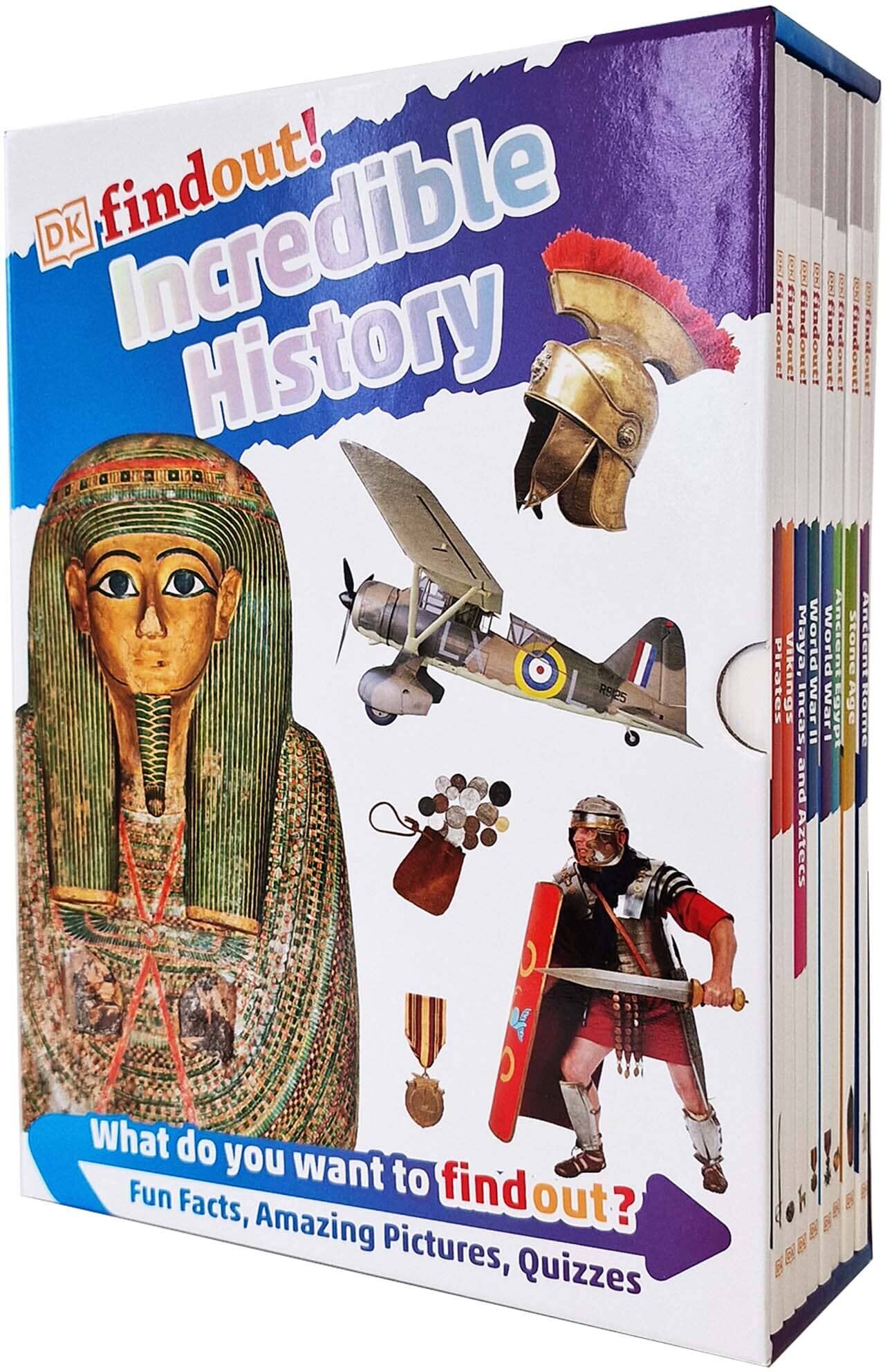
DK findout!: Incredible History Collection 8 Books Box Set - Ages 6-9 - Paperback DK ChildrenTitle in This Set: 1. DKfindout! Ancient Rome 2. Dkfindout! Stone Age 3. DKfindout! Ancient Egypt 4. Dkfindout! World War I 5. Dkfindout! World War II 6. DKfindout! Maya, Incas, and Aztecs 7. Dkfindout! Vikings 8. DKfindout! Pirates Description: DKfindout! Ancient Rome How many miles did Roman soldiers walk in a day? Which pungent food did they eat to stay healthy? What is a strigil and what did the Romans use it for? Find out the answers to these questions and more in DKfindout! Ancient Rome, which features photographs of Roman artifacts and relics, as well as maps and illustrations depicting the structure of their society, from slaves to emperors. This book explores every facet of Ancient Rome's iconic culture, including its many gods and goddesses, its Roman numeral counting system, and its most well-known architectural features, like domes, columns, and arches. From temples to togas, DKfindout! Ancient Rome details this civilization's lasting impact in a unique and fun way. Dkfindout! Stone Age How did people survive during the Stone Age? What innovative tool did they refer to as a "thunderstone"? How big could woolly mammoths grow? Find out the answers to these questions and more in DKfindout! Stone Age, which features photographs of ancient artifacts and relics, as well as illustrations and maps depicting how early humans hunted, communicated, and migrated across continents. Readers will learn about the three main periods of the Stone Age--the Paleolithic, Mesolithic, and Neolithic--and the key developments of each era, from the creation of stone tools and weapons to the start of modern agriculture. DKfindout! Stone Age illuminates this important stage in our species' past, providing kids with plenty of interesting details to pore over. DKfindout! Ancient Egypt What will you learn about Ancient Egypt today? Travel back in time to learn all about the pharaohs of Egypt, decode Egyptian hieroglyphs, and see how the Great Pyramid of Giza was built. See if you can survive the game of childhood, take a tour of an Egyptian home, and find out how a mummy was made. Packed with fun facts, amazing pictures, and quizzes, this book really will have children coming back for more! Dkfindout! World War I From pre-war Europe to women in wartime, discover fascinating facts about all aspects of World War I. With the 100th Anniversary of the end of the war in 2018, DKfindout! World War I helps kids discover what caused the conflict and what were the most important battles. The DKfindout! series will satisfy any child who is eager to learn - and keep them coming back for more! Dkfindout! World War II When did World War II begin? How were people protected during an air raid? How did the Allies crack the enemy's secret code? Find out the answers to these questions and more in DKfindout! World War II, which features photographs and illustrations of war machines, battlefields, and world leaders from throughout the span of this widespread conflict. Readers will...18,89 £*Shipping: 2,99 £Secure redirect to the provider
-
Pan Macmillan Children of Time Series 3 Books Collection Set (Children of Time, Children of Ruin & Children of Memory)Children of TimeChildren of Time, is the epic story of humanity's battle for survival on a terraformed planet.Who will inherit this new Earth? The last remnants of the human race left a dying Earth, desperate to find a new home among the stars. Following in the footsteps of their ancestors, they discover the greatest treasure of the past age – a world terraformed and prepared for human life.Children of RuinIt has been waiting through the ages. Now it's time . . .Thousands of years ago, Earth’s terraforming program took to the stars. On the world they called Nod, scientists discovered alien life – but it was their mission to overwrite it with the memory of Earth. Then humanity’s great empire fell, and the program’s decisions were lost to time.Aeons later, humanity and its new spider allies detected fragmentary radio signals between the stars. They dispatched an exploration vessel, hoping to find cousins from old Earth.But those ancient terraformers woke something on Nod better left undisturbed.And it’s been waiting for them.Children of MemoryThey dreamed of a new homeThey woke to a nightmareOn Imir, Captain Holt founded a new colony on an empty world. In the process, he created hope and a new future for humanity. But generations later, his descendants are struggling to survive. As harvests worsen and equipment fails, strangers appear in a town where everyone knows their neighbour. Now the inexplicable lurks in the woods and the community fears it’s being observed – that they’re not alone.They’d be right, as explorers from the stars have arrived in secret to help this lost outpost. Confident of their superior technology, and overseen by the all-knowing construct of Doctor Avrana Kern, they begin to study their long-lost cousins from Earth.16,49 £*Shipping: 2,99 £Secure redirect to the provider
-
Tudor Children by Nicholas Orme - Hardback Tudor Social History Book, Yale University Press, New, 256 PagesTudor Children is a richly illustrated and vividly told history of childhood in Tudor England, written by leading historian Nicholas Orme. Drawing on years of original research, Orme reconstructs how children were born, raised, educated, and entertained between the fifteenth and seventeenth centuries. From royal nurseries to humble cottages, the book reveals the realities, dangers, and delights of growing up under the Tudors, offering fresh insight into a previously overlooked corner of English social history. What was it really like to be young in Tudor England? In this beautifully illustrated and characteristically lively account, Nicholas Orme answers that question by piecing together evidence from wills, portraits, court records, schoolbooks, and household accounts. He explores pregnancy and birth, naming customs, and breastfeeding.15,99 £*Shipping: 2,99 £Secure redirect to the provider
-
Why is nature important for children?
Nature is important for children because it provides them with opportunities for exploration, creativity, and physical activity. Being in nature can help children develop a sense of wonder and curiosity about the world around them, as well as foster a deeper connection to the environment. Additionally, spending time in nature has been shown to have numerous physical and mental health benefits for children, including reducing stress, improving concentration, and promoting overall well-being. **
-
What are activities with children in nature?
Activities with children in nature can include hiking, exploring local parks, going on nature scavenger hunts, bird watching, camping, and gardening. These activities provide children with opportunities to connect with the natural world, learn about different plants and animals, and develop a sense of wonder and appreciation for the environment. Engaging in outdoor activities also promotes physical activity, creativity, and overall well-being for children. **
-
How can one bring children closer to nature?
One can bring children closer to nature by incorporating outdoor activities into their daily routine, such as going for nature walks, picnics, or camping trips. Providing opportunities for children to explore and play in natural environments, such as parks, forests, or beaches, can help foster a connection to the natural world. Additionally, involving children in gardening, birdwatching, or other nature-related hobbies can help them develop an appreciation for the beauty and importance of nature. Finally, teaching children about the environment, wildlife, and conservation can help them understand the interconnectedness of all living things and inspire them to protect and preserve the natural world. **
-
What is the history of the children?
The history of children is a complex and multifaceted one, shaped by cultural, social, and economic factors throughout time. In ancient societies, children were often viewed as property of their parents and had limited rights. During the Middle Ages, children were often put to work at a young age and had few opportunities for education. The concept of childhood as a distinct and important stage of life began to emerge during the Renaissance, and the 19th and 20th centuries saw significant advancements in child labor laws, education, and child welfare. Today, children's rights are recognized and protected by international conventions and laws, although challenges such as child labor, poverty, and access to education still persist in many parts of the world. **
Similar search terms for Children
-
Fox Eye Publishing Children Introduction to History for Beginners (Series 1 & 2) 20 Books Collection Set - Illustrated Learning Book of World History for Kids"Introduction to History Series 1" comprises a captivating 10-book set delving into pivotal periods, figures, and events that shaped our world. Each book is a gateway to a distinct facet of history, inviting readers to embark on an enriching journey through time. Introduction to Ancient China: The ancient Chinese were clever inventors and fearsome fighters. Find out more about them and their amazing way of life inside. Introduction to Industrial Revolution: What was the Industrial Revolution and why did it happen? Find out inside. Introduction to Strange Places: What are strange places and what have we learnt about them? Find out inside. Introduction to Celts: The Celts were fearsome warriors and clever craftspeople. Find out more about them and their amazing way of life inside. Introduction to Discovering the Past: The past is full of wonder, and we can discover it by digging it up! Find out all about past people and how we learn about them inside. Introduction to Ancient Greeks: The ancient Greeks were clever thinkers and master builders. Find out more about them and their amazing way of life inside. Introduction to The Maya: The Maya were fierce fighters and master mathematicians. Find out more about them and their amazing way of life inside. Introduction to Romans: The Romans built an incredible empire that conquered much of the world. Find out more about them and their amazing way of life inside. Introduction to Vikings: The Vikings were fierce fighters and great explorers. Find out more about them and their amazing way of life inside. Introduction to The Victorians: Who were the Victorians and how did they change history? Find out inside. Each book in this set offers a captivating glimpse into a different facet of history, providing a comprehensive introduction to these diverse and intriguing civilizations and eras. "Introduction to History Series 2" comprises a captivating 10-book set delving into pivotal periods, figures, and events that shaped our world. Each book is a gateway to a distinct facet of history, inviting readers to embark on an enriching journey through time. Introduction to Great Explorers: Who were history’s great explorers and where did they travel? Find out inside. Introduction to Great Inventors: Who were history’s great inventors and what did they invent? Find out inside. Introduction to Great Scientists: Who were history’s great scientists and what did they discover? Find out inside. Introduction to Castles: Castles were amazing buildings that were home to many people. Find out all about castles and what life was like inside them. Introduction to Kingdoms of the Past: What were the great kingdoms of the past and who ruled them? Find out inside. Introduction to Mysterious Tombs and Treasures: What are mysterious tombs and treasures and where can they be found? Find out inside. Egyptians: The ancient Egyptians were clever farmers and brilliant builders. Find out more about them and their amazing way of life inside. The...14,99 £*Shipping: 2,99 £Secure redirect to the provider
-
Pan Macmillan Children of Time Series 3-Book Collection Set by Adrian Tchaikovsky - Children of Time, Children of Ruin, Children of Memory - Paperback Sci-FiThis Children of Time Series 3 Book Collection Set brings together Adrian Tchaikovsky's Arthur C. Clarke Award-winning space opera trilogy in one brand-new paperback bundle. The set traces evolution, memory, and survival across three interlinked novels, making it a great pick for science fiction readers and book clubs. The series includes Children of Time, Children of Ruin, and Children of Memory. Published by Pan Macmillan, this collection is a must-have for fans of the series and the author.12,99 £*Shipping: 2,99 £Secure redirect to the provider
-
From the Archives: Black History and Culture Value PackThis brand-new series is rooted in a profound commitment to shedding light on some of the important -- and often lesser-known -- aspects of Black history. From the Archives features landmarks, events, people, and artistic endeavors that have played...27,99 $*Shipping: 0,00 $Secure redirect to the provider
-
Is man a creature of nature or culture, or is culture the nature of man?
Man is a complex being influenced by both nature and culture. While humans are inherently part of the natural world, our behaviors, beliefs, and practices are largely shaped by the societies we live in. Culture can be seen as the nature of man in the sense that it is a fundamental aspect of human existence, shaping our identities and interactions with the world. Ultimately, the relationship between nature and culture is intertwined in shaping the essence of humanity. **
-
Is man a being of nature or culture, or is culture the nature of man?
Man is a being of both nature and culture. While humans are inherently a part of the natural world, our ability to create and participate in culture sets us apart from other species. Culture shapes our beliefs, behaviors, and interactions with the world, becoming an essential part of our identity. Therefore, culture can be seen as the nature of man, as it influences and defines our existence in profound ways. **
-
Is culture a form of nature?
Culture is not a form of nature, but rather a product of human society. While culture can be influenced by nature and the environment, it is distinct in that it is created, shared, and passed down through generations by humans. Nature refers to the physical world and natural phenomena, while culture encompasses the beliefs, customs, arts, and social behaviors of a particular group of people. **
-
Can children carry children?
No, children cannot carry children. Physically, children's bodies are not developed enough to support a pregnancy and give birth. Additionally, children lack the emotional and mental maturity needed to handle the responsibilities of pregnancy and parenthood. It is important for individuals to reach a certain level of physical, emotional, and mental maturity before considering starting a family. **
* All prices are inclusive of VAT and, if applicable, plus shipping costs. The offer information is based on the details provided by the respective shop and is updated through automated processes. Real-time updates do not occur, so deviations can occur in individual cases. ** Note: Parts of this content were created by AI.